Greta Zimmermann · 12 September 2026
Reconstructing User Workflows in Digital Note Platforms After Infrastructure Shifts
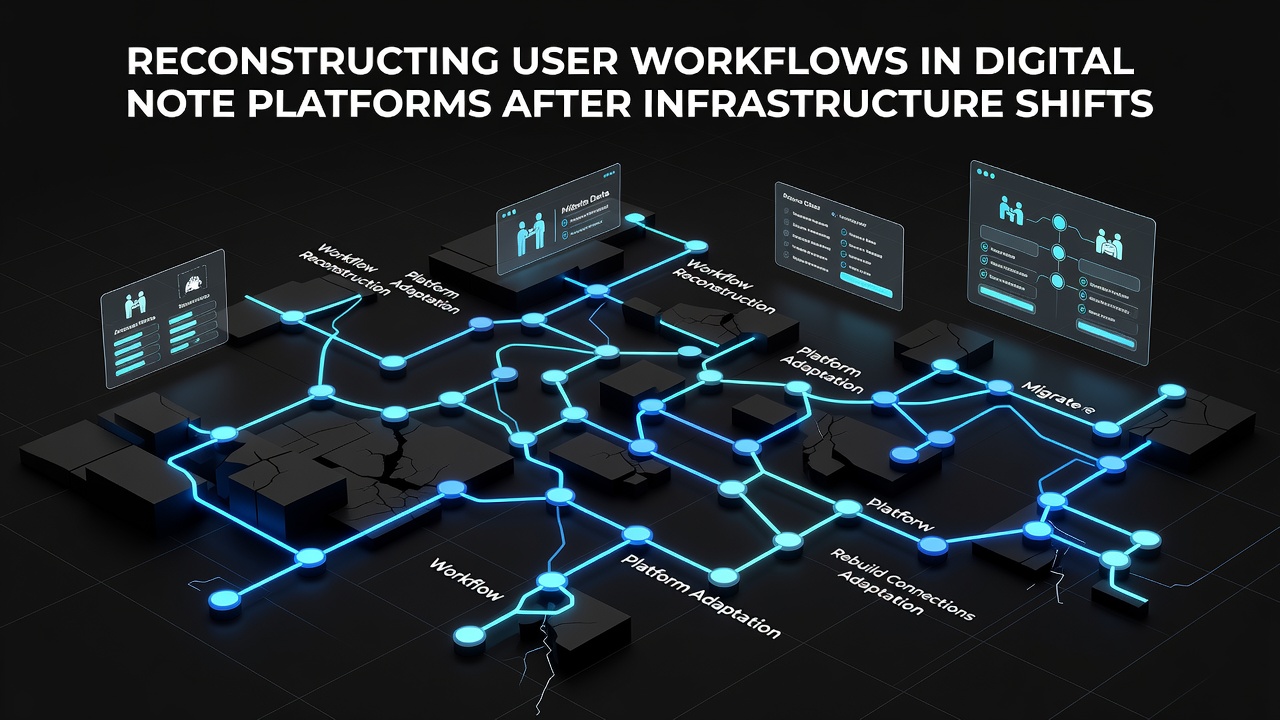
Digital note platforms undergo infrastructure shifts when organizations move between cloud providers, adopt new database architectures, or implement serverless computing models, and these changes require systematic reconstruction of user workflows to maintain continuity in note creation, synchronization, and retrieval processes. Studies from various research institutions show that such shifts often involve data relocation across distributed systems while preserving access patterns that users have established over time. Observers note that platforms must map existing user actions onto new backend structures without disrupting daily operations for millions of active accounts.
Common Types of Infrastructure Changes
Platforms experience shifts when they transition from monolithic servers to containerized environments, or when they integrate edge computing nodes to reduce latency for global users. These modifications alter how notes sync across devices and how search indexes update in real time. Data indicates that organizations frequently choose multi-cloud setups to avoid vendor lock-in, yet this decision introduces complexity in maintaining consistent workflow states across regions. Researchers have documented cases where database migrations from relational to NoSQL systems force adjustments in how tags, folders, and collaborative editing features operate.
Challenges in Workflow Adaptation
User workflows face disruption when API endpoints change or when authentication mechanisms update during an infrastructure overhaul. People often find that features like offline access and real-time collaboration require reimplementation because underlying data consistency models shift. According to findings from the Cloud Security Alliance, encryption key management becomes more intricate after migrations, which affects how users share notes securely across teams. Those who have studied these transitions report that search functionality can degrade temporarily if indexing services are not properly reconfigured on the new infrastructure.
Methods for Reconstructing Workflows
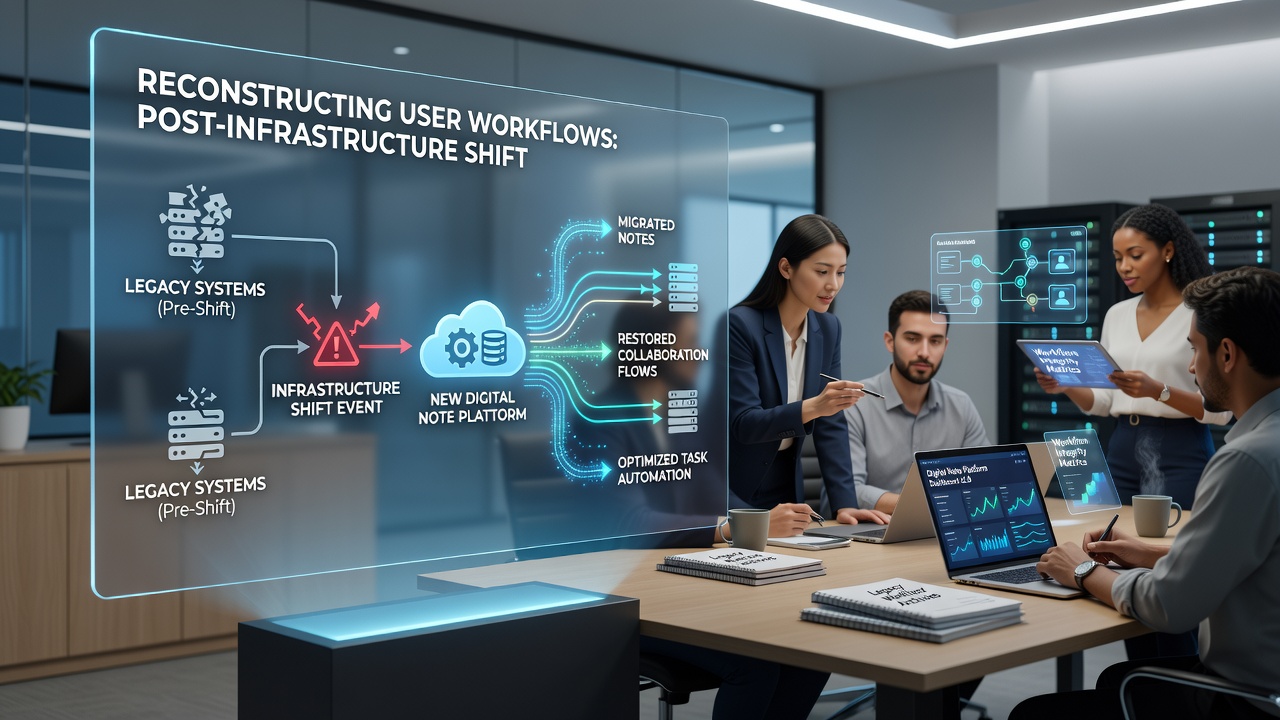
Teams begin reconstruction by analyzing user behavior logs to identify core actions such as note creation, editing sequences, and sharing patterns. They then design new interfaces that replicate these actions on updated systems while incorporating improvements in performance. Experts have observed that phased rollouts allow gradual testing, where small user groups validate reconstructed workflows before wider deployment. Automated tools help translate legacy scripts into formats compatible with new infrastructure, reducing manual effort during the transition period.
One approach involves creating abstraction layers that shield users from backend alterations, so note-taking remains intuitive even as storage engines evolve. Platforms may introduce temporary dashboards that guide users through updated processes, highlighting changes in synchronization speed or collaboration tools. Research indicates that involving user feedback loops during reconstruction leads to higher retention rates after the shift completes.
Case Examples from Recent Shifts
Platforms that completed major migrations in 2025 demonstrated varied success in workflow reconstruction. Some maintained near-zero downtime for core features by using blue-green deployment strategies, while others encountered temporary gaps in cross-device syncing until caches fully refreshed. Observers note that companies investing in detailed user journey mapping beforehand experienced smoother transitions and fewer support tickets afterward. Data from government digital transformation reports, including those published by Australian authorities, highlights how clear communication about upcoming changes helps users adapt their personal note management habits.
Developments Expected by September 2026
As infrastructure technologies continue evolving, analysts project that more note platforms will adopt AI-assisted workflow reconstruction tools by September 2026 to automate the mapping of user actions onto new systems. These tools could analyze historical usage data and suggest optimized paths for note organization after a shift occurs. Figures from industry reports show increasing adoption of zero-trust security models during migrations, which influences how shared note access gets reestablished. Researchers continue to examine how regulatory requirements in different jurisdictions shape these reconstruction processes, particularly around data residency rules that affect workflow design across borders.
Conclusion
Reconstruction of user workflows after infrastructure shifts represents a critical phase for digital note platforms seeking to preserve functionality and user trust. Successful efforts rely on thorough analysis of existing patterns, careful implementation of new backend capabilities, and ongoing monitoring of user interactions. As platforms navigate future changes, documented strategies from past migrations provide valuable reference points for maintaining seamless note management experiences across evolving technical landscapes.