Yara Walter · 24 October 2026
How Distributed Teams Maintain Annotation Consistency Amid Backend Service Adjustments in Note Apps
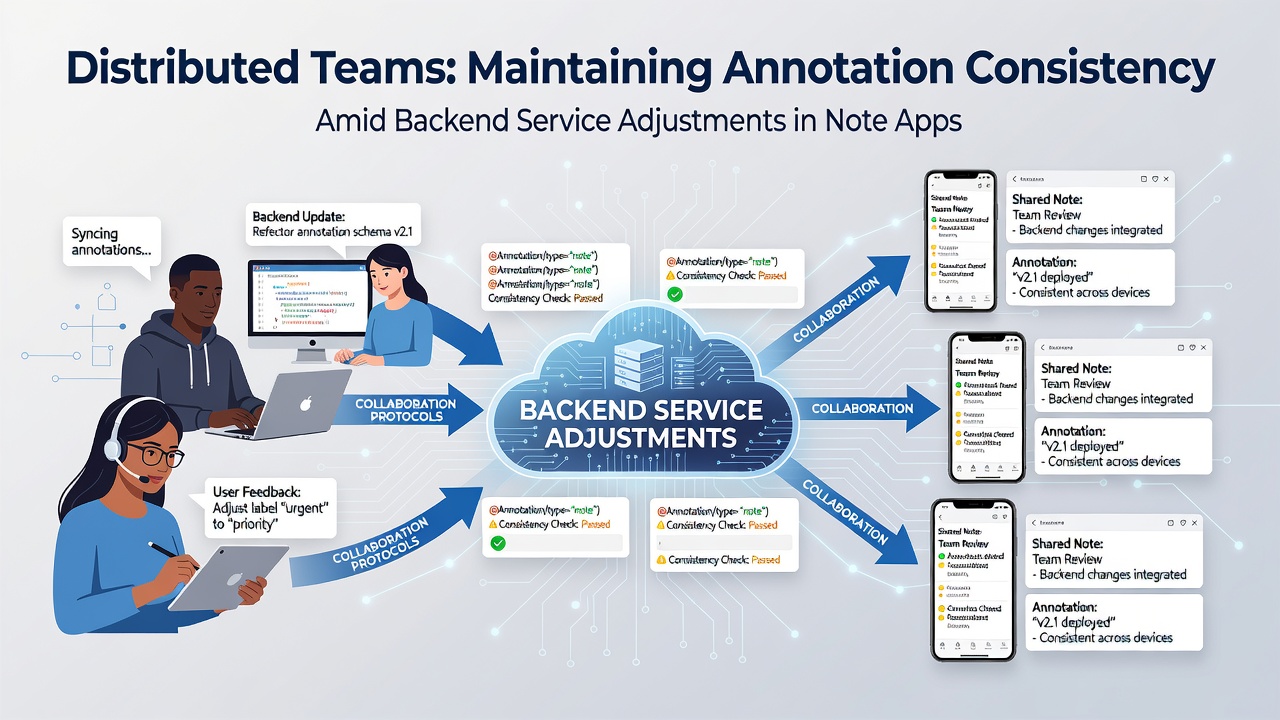
Distributed teams working on note applications face ongoing demands when backend services undergo adjustments, and these shifts often require precise coordination to keep annotations aligned across all users. Researchers at various institutions have documented how changes in database schemas, API endpoints, or cloud infrastructure can disrupt annotation layers unless specific protocols intervene early in the process.
Core Mechanisms for Synchronization
Teams typically rely on versioned annotation schemas that track every modification through unique identifiers assigned at creation time, and these identifiers remain stable even after backend migrations occur. Data from the National Institute of Standards and Technology shows that standardized metadata formats reduce drift by allowing annotations to reference content positions rather than fixed coordinates alone. When services adjust, automated reconciliation scripts compare current states against stored snapshots, then apply deltas that preserve user intent without manual intervention in most cases.
Many organizations implement event-driven architectures where annotation updates publish as messages to distributed queues, and subscribing services process these messages in sequence to maintain order. This approach becomes essential during backend reallocations because it decouples frontend rendering from underlying storage changes, allowing teams in different time zones to continue work uninterrupted.
Handling Service Adjustments in Practice
Backend adjustments range from minor API deprecations to full service migrations, and teams prepare by maintaining comprehensive test suites that simulate these scenarios before deployment. Observers note that simulation environments replicate production traffic patterns, which helps identify annotation inconsistencies that might otherwise surface only after live updates roll out. In October 2026 several note platforms completed phased migrations to new container orchestration systems, adn reports indicated that pre-staged consistency checks prevented widespread annotation misalignment across user bases.
Conflict resolution layers sit at the center of these workflows because simultaneous edits from remote contributors can produce overlapping annotation positions after a service change. Algorithms based on operational transformation or conflict-free replicated data types resolve these overlaps deterministically, and studies from European research consortia confirm that such methods scale effectively when team sizes exceed fifty concurrent editors.
Tools and Protocols in Use
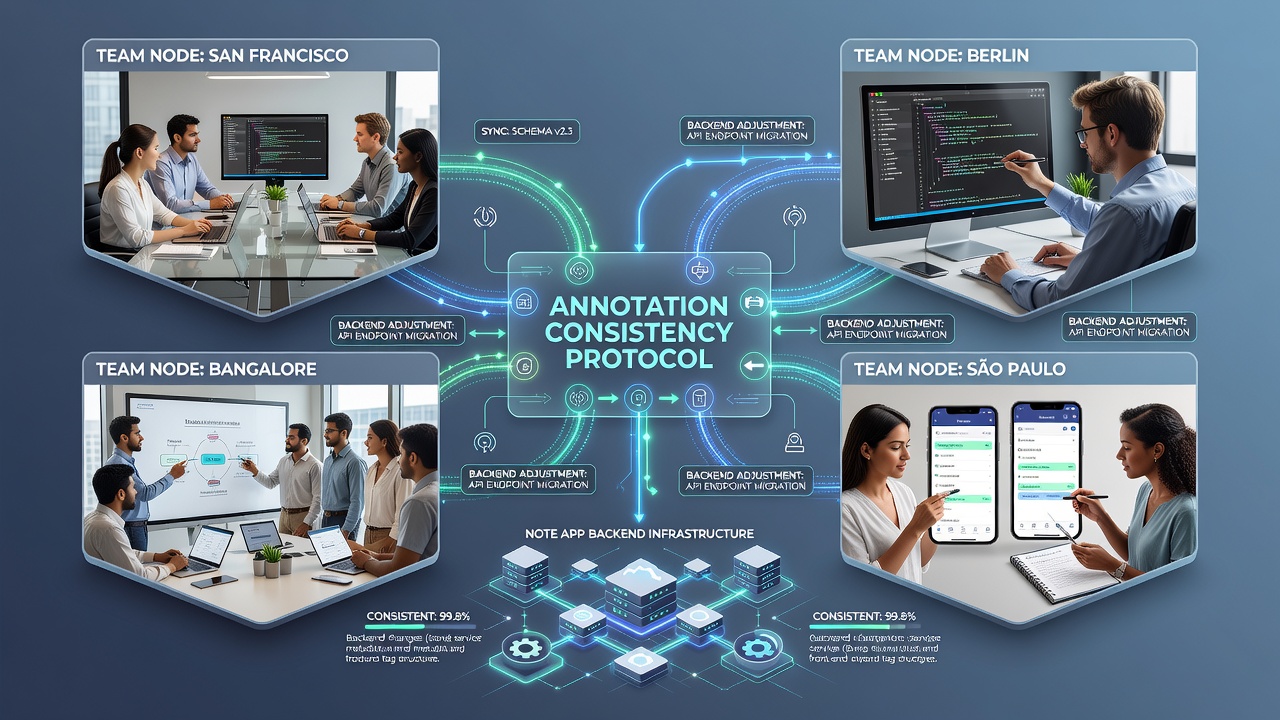
Version control systems extended for annotation data store every revision as a separate branch until merges complete, and this practice gives teams visibility into how backend adjustments affect individual layers. Continuous integration pipelines run automated checks that validate annotation integrity against sample datasets drawn from real user activity, and failures trigger alerts before changes reach production environments. Teams also deploy monitoring dashboards that track annotation render accuracy metrics in real time, surfacing anomalies that correlate with recent service modifications.
Communication standards such as WebSocket channels carry annotation presence information between clients, and these channels remain active during backend transitions because they route through resilient proxy layers. Industry reports from the Association for Computing Machinery highlight that organizations adopting these standards experience fewer user-reported inconsistencies following infrastructure updates compared with those relying on polling-based alternatives.
Case Examples from Distributed Teams
One development group at a global productivity platform introduced annotation pinning mechanisms tied to content hashes rather than line numbers, adn this change allowed annotations to survive multiple backend storage migrations without repositioning errors. Another team working across North American and Asian offices established weekly consistency audits where engineers review recent service logs against annotation placement statistics, identifying patterns that inform future adjustment procedures. These audits incorporate data from internal telemetry systems and external benchmarks published by academic groups studying collaborative software.
Training programs for new team members emphasize understanding how backend service contracts interact with annotation rendering logic, and documentation repositories store decision records that explain past resolutions to similar adjustment challenges. This institutional knowledge reduces onboarding time while preserving continuity when personnel rotate across projects.
Conclusion
Distributed teams sustain annotation consistency through layered technical safeguards, structured testing routines, and shared documentation practices that adapt to backend service adjustments over time. These methods continue to evolve as note applications incorporate new collaboration features and infrastructure options, with ongoing contributions from standards bodies and research communities supporting broader adoption across the industry.