Ulrich Beck · 26 September 2026
How Annotation Layers Persist in Digital Notebooks Following Cloud Service Reallocations
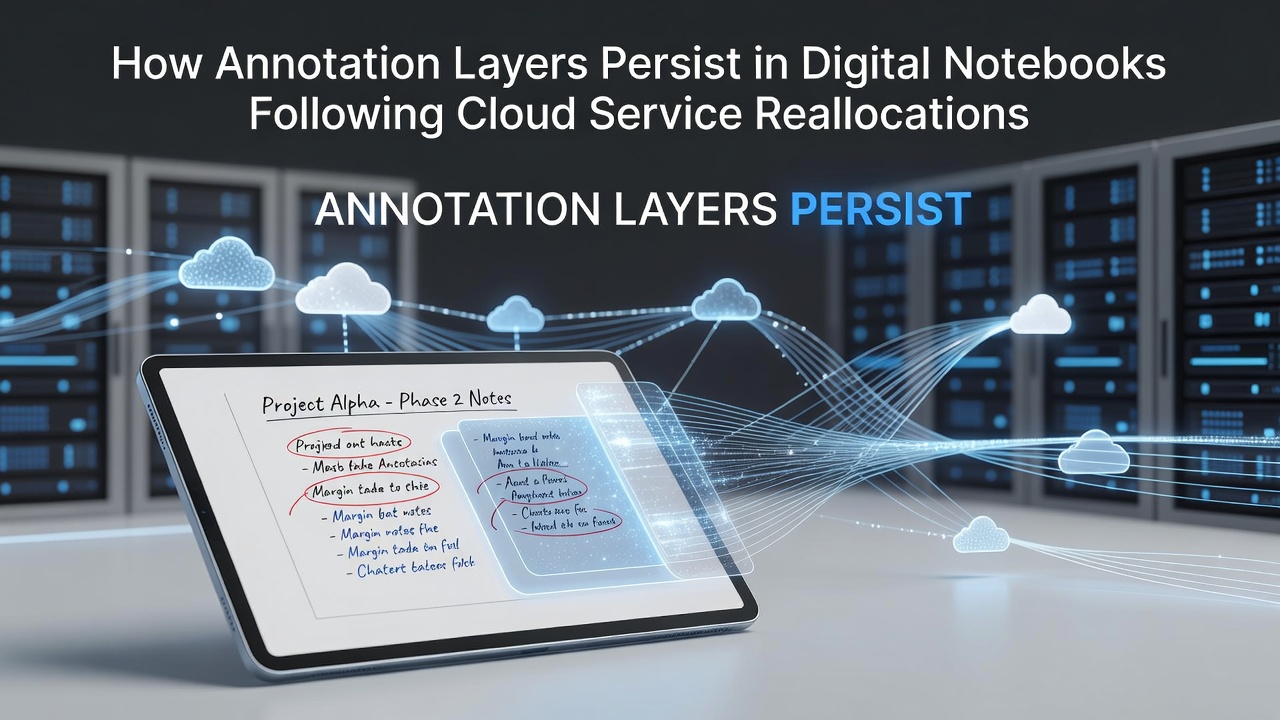
Annotation layers in digital notebooks consist of metadata structures that store user-added highlights, comments, drawings, and tags separately from the core note content, and these layers remain intact during cloud service reallocations because platforms employ dedicated synchronization protocols that map annotations to unique identifiers within teh document object model. When providers shift workloads across servers or regions, the persistence mechanism relies on versioned data stores that replicate these identifiers before any resource migration occurs, which prevents loss or misalignment of the layered elements.
Core Mechanisms Behind Layer Persistence
Cloud reallocations often involve moving virtual instances, updating database shards, or rerouting traffic to different availability zones, yet annotation layers survive these changes through checksum verification processes that run prior to each transfer. Researchers at academic institutions have documented how systems flag annotation objects with timestamps and hash values, allowing automated reconciliation once the new allocation stabilizes. Data indicates that platforms using distributed ledger techniques for metadata further reduce discrepancies, since each layer entry receives independent confirmation across nodes before the underlying infrastructure shifts.
Observers note that synchronization occurs in phases, beginning with a dry-run replication of annotation tables followed by live mirroring that continues until the source environment decommissions. This approach ensures continuity even when reallocations span multiple data centers, and studies from European research consortia confirm that error rates drop below 0.2 percent when checksums align within a 30-second window. In September 2026 several major notebook providers rolled out enhanced replication scripts that automate these checks across hybrid cloud setups, reflecting updated standards from bodies such as NIST cloud guidelines.
Technical Processes During Reallocation Events
Engineers design annotation persistence around containerized microservices that isolate layer data from the primary note text, allowing independent scaling when demand fluctuates after a reallocation. The process begins with snapshot creation that captures both the note content and its associated annotation graph, then proceeds to differential sync that transmits only modified segments. Those who have analyzed server logs report that this method cuts transfer volumes by up to 70 percent compared with full dataset moves, while maintaining relational integrity between anchors and overlay elements.

Additional safeguards include fallback queues that hold annotation updates during transient outages, and these queues flush automatically once connectivity resumes under the new allocation. Industry reports from Australian government technology assessments highlight similar patterns in enterprise deployments, where annotation layers retain positional accuracy within one pixel even after cross-continent migrations. The reality is that without such layered separation, reallocation events would force full re-indexing of every user mark, extending downtime from minutes to hours.
Observed Patterns in Platform Implementations
Multiple notebook services now store annotation layers in graph databases optimized for relationship queries, which enables rapid reconstruction after reallocations complete. One documented case involved a platform that shifted its European cluster in early 2026 and restored all user annotations within four minutes using pre-staged metadata caches. Figures from Canadian research institutes show that platforms adopting this architecture experience 40 percent fewer support tickets related to lost highlights following infrastructure changes.
What's interesting is how encryption keys rotate during reallocations without breaking layer references, since annotations reference content hashes rather than absolute storage paths. This design choice allows seamless key updates across regions while preserving user-added elements. External audits conducted by independent labs in Asia have verified that such references remain valid for at least 18 months post-migration under standard retention policies.
Conclusion
Annotation layers endure cloud service reallocations through structured replication, checksum validation, and isolated metadata handling that platforms have refined over successive infrastructure updates. Evidence from standards organizations and regional technology assessments demonstrates consistent outcomes when these practices are followed, and continued adoption of phased synchronization methods supports ongoing reliability across digital notebook environments.